
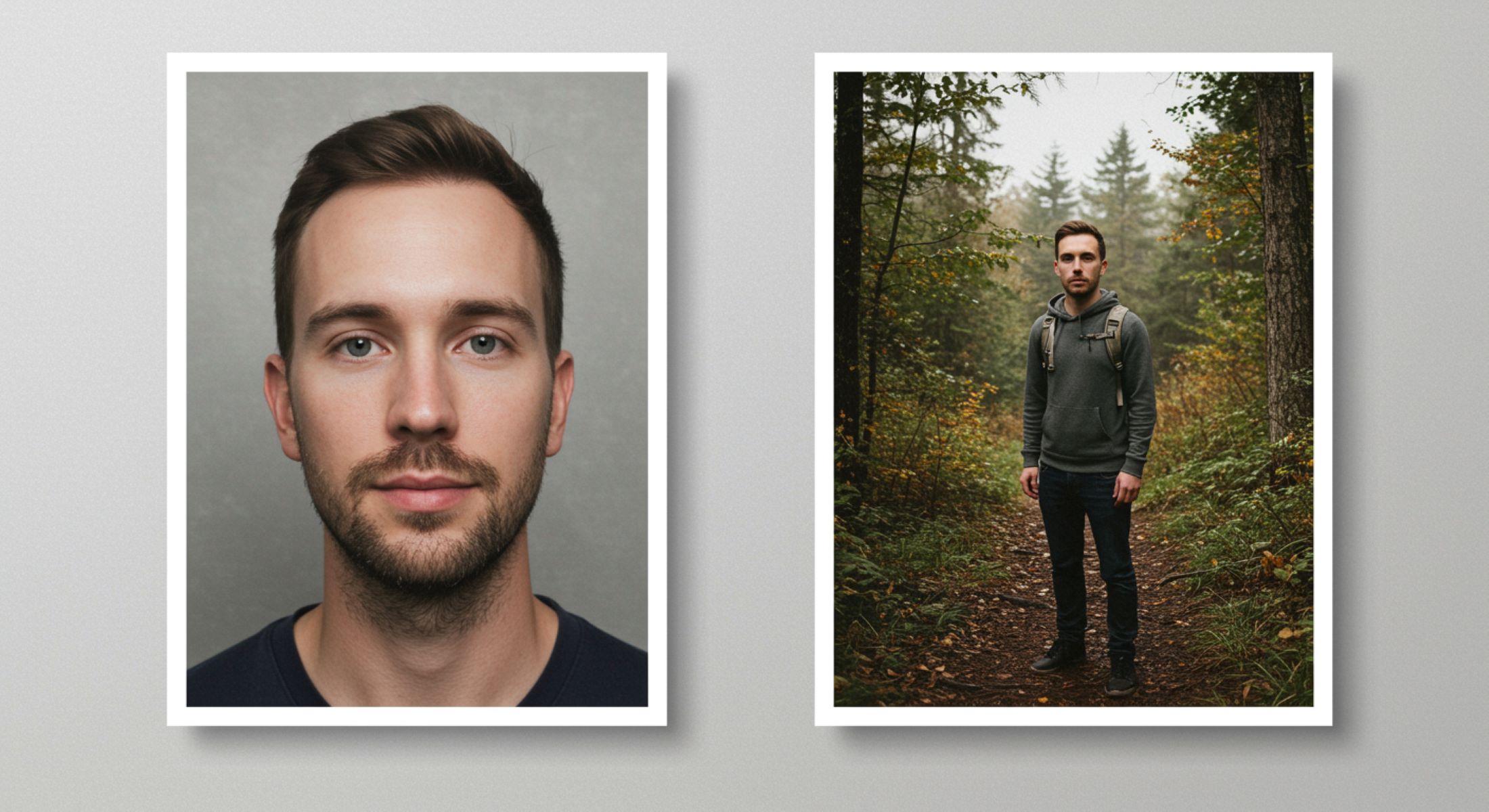
Ever wondered why some photos are perfect for your passport or driver’s license, but just won’t cut it for your social media profiles? The terms ID photo and profile photo get tossed around a lot, but they actually serve very different purposes. Understanding these differences is more important than you might think. Whether you’re applying for a visa, updating LinkedIn, or just snapping a selfie, knowing which photo fits which role can save you a headache (and maybe even rejection!).
What Is an ID Photo?
An ID photo is a highly specialized type of photograph designed specifically for official documents such as passports, driver’s licenses, national identification cards, or employee badges. Unlike casual photos or selfies, ID photos serve a very practical purpose: to clearly and accurately represent a person’s facial features for identification and verification purposes. Because these images play a critical role in security and legal matters, they are subject to stringent standards and guidelines to ensure uniformity and reliability.
These photos must adhere to strict size and format requirements, which vary depending on the issuing authority but often include dimensions like 2×2 inches for passports. The importance of a standardized size is to ensure that the photo fits perfectly in official documents and can be easily compared against the individual’s real appearance. Every detail, from the positioning of the head to the visible portion of the face, is carefully regulated to prevent any ambiguity or room for error during identification processes.
Another defining feature of an ID photo is the expression and presentation of the person. Unlike casual pictures where smiles and personality shine through, ID photos require a neutral expression with no smiles, open mouths, or exaggerated facial movements. The goal is to capture a natural, straightforward view of the face that remains consistent over time. This neutral look helps authorities and automated systems alike to quickly and accurately match the photo to the person in various situations, such as border controls or security checkpoints.
The background of an ID photo is also crucial. It must be plain, usually white or a very light color, with no patterns, shadows, or objects that could distract from the face. Additionally, no accessories such as hats, sunglasses, or anything that obscures the face are allowed, unless for medical or religious reasons under specific regulations. These rules guarantee that the facial features are fully visible and unobstructed, providing a clear, unambiguous image to facilitate smooth identification in any official setting.
What Is a Profile Photo?
- Profile photos offer much more flexibility compared to ID photos, allowing you to showcase your personality and style in a way that suits the platform where the photo will be displayed.
- They are commonly used across a wide range of platforms, including social media sites like Facebook and Instagram, professional networking sites such as LinkedIn, dating apps, messaging platforms, and even online gaming profiles.
- Unlike the strict size requirements of ID photos, profile photos come in various sizes and shapes—square, circular, rectangular—depending on the platform’s design and preferences.
- Expression is a major element in profile photos; you can smile, pose casually, show candid moments, or even create fun and creative shots to engage viewers and express who you are.
- The backgrounds of profile photos can vary widely and can include natural outdoor scenes, cozy indoor settings, plain colors, or even digitally edited backdrops designed to enhance the overall image.
- Personal style shines through in profile photos, including choices of clothing, hairstyles, makeup, accessories, and even the way lighting is used to highlight your best features or set a mood.
- Profile photos often serve as a form of personal branding, reflecting your personality, professional image, or the vibe you want to convey—whether that’s approachable, confident, creative, or fun.
- They can be casual or formal depending on the context: a relaxed selfie might work on Instagram, while a polished headshot fits LinkedIn better.
- Unlike ID photos, there are usually no restrictions on using filters or photo editing tools to enhance colors, smooth skin, or add artistic effects in profile photos.
- Profile photos allow for artistic freedom, giving you the chance to experiment with angles, lighting, and poses to capture a unique and authentic version of yourself.
- They help people form impressions quickly, making your choice of photo critical for social interaction, networking, or dating success.
ID Photo vs. Profile Photo: Side-By-Side Comparison
| Feature | ID Photo | Profile Photo | Typical Use Cases | Importance |
| Purpose | Used for official identification on documents like passports, driver’s licenses, and work badges. | Used for social media, professional networking, dating apps, and casual online presence. | Government documents, security checks | Ensures accurate identity verification and security. |
| Expression | Neutral expression with no smile, mouth closed, and eyes clearly visible to avoid distortions. | Relaxed, smiling, candid, or expressive depending on the platform and personal style. | LinkedIn, Facebook, Instagram, dating platforms | Influences first impressions, trustworthiness, and approachability. |
| Background | Plain, usually white or light-colored with no patterns, shadows, or distractions. | Any background is acceptable, from natural scenes to digitally edited settings. | Official photos, IDs | Provides clarity and uniformity for official use; creativity for personal use. |
| Size & Format | Fixed dimensions such as 2×2 inches or specified by issuing authority, usually standard formats. | Flexible sizing and shape, varies widely across platforms like circular, square, or rectangular. | Passport applications, driver’s licenses | Ensures compatibility with document requirements vs. platform needs. |
| Accessories | No hats, glasses with reflections, or anything obscuring the face unless for medical or religious reasons. | Accessories like hats, glasses, jewelry, or makeup are allowed and often used to express personality. | Security documents vs. social or professional profiles | Maintains facial visibility vs. encourages personal style. |
| Lighting | Even, shadow-free lighting to highlight true facial features without distortion. | Creative lighting is acceptable and often enhances mood, tone, or aesthetics of the photo. | Official photos vs. social media or professional portraits | Ensures clear identification vs. artistic expression. |
| Editing | Strictly no alterations or retouching allowed to keep the photo authentic and unchanged. | Editing and enhancements such as filters, retouching, or color adjustments are common and accepted. | Official documentation vs. personal branding and social interaction | Maintains photo authenticity vs. personalizing appearance. |
Why Are ID Photos So Strict?
You might wonder why ID photos come with such stringent rules and why something as simple as a selfie isn’t acceptable for official documents like passports or driver’s licenses. The main reason boils down to security and consistency. Official documents require a clear and standardized image that can be reliably used by authorities to verify a person’s identity in various situations, such as border control or legal processes. A casual photo, with different lighting, angles, or expressions, would make it difficult to confidently match the photo to the individual in real life.
Consistency plays a critical role in identity verification. If everyone submitted photos taken in wildly different styles, with various backgrounds, lighting conditions, and facial expressions, it would become nearly impossible for officials or automated systems to compare images accurately. A uniform set of rules for ID photos ensures that the face is presented in the same way across all documents, providing a reliable baseline for recognition. This uniformity reduces errors and speeds up identification, which is crucial in security-sensitive environments.
Another important reason for strict ID photo standards is fraud prevention. By enforcing rigid guidelines about how the photo should look, authorities make it much harder to manipulate or falsify images. For example, rules against wearing hats, glasses with reflections, or using heavy photo editing help ensure the photo truly represents the person. This reduces the risk of identity theft and other illegal activities where fake or altered documents could be used to deceive systems or people.
Finally, these strict requirements are backed by legal mandates from governments and regulatory bodies. Uniformity is not just a practical preference but a legal necessity to maintain the integrity of identification systems. Governments and organizations worldwide set these rules to protect both the individual and society at large by ensuring that official documents are trustworthy and standardized. This legal framework helps maintain public confidence in identification processes and strengthens the overall security infrastructure.
When Do You Need an ID Photo?
- Applying for passports or visas is one of the most common reasons you’ll need an official ID photo. These photos must meet strict government requirements to ensure smooth international travel and border security.
- Obtaining a driver’s license or state-issued identification card always requires a standardized ID photo. This photo is used not only for identification but also to maintain accurate records for legal and safety purposes.
- Many workplaces issue employee ID badges that include a photo for security and access control. These photos help ensure that only authorized personnel can enter certain areas or perform specific tasks.
- Student ID cards issued by schools, colleges, and universities require ID photos to identify students on campus, grant access to facilities, and sometimes to verify eligibility for discounts or services.
- Security clearances or other government-related documents often demand ID photos to confirm an individual’s identity before granting access to sensitive information or secure locations.
- Applying for certain professional licenses or certifications may require a photo to be included with your official credentials.
- Membership cards for clubs, gyms, or other organizations frequently include ID photos for member verification.
- When registering for exams or standardized tests, an ID photo is often required to prevent impersonation and maintain the integrity of the testing process.
- Some health insurance or medical cards use ID photos to ensure proper identification of the cardholder during medical visits.
- Immigration or residency permits typically need official ID photos as part of the application to prove identity and residency status.
- Various types of permits such as firearms licenses, hunting permits, or fishing licenses often include ID photos as a security measure.
When Should You Use a Profile Photo?
| Platform Type | Examples | Purpose | Ideal Photo Style | Key Considerations |
| Social Media Accounts | Facebook, Instagram, Twitter | To connect with friends, share life moments, and build a personal online presence. | Casual, friendly, expressive | Use bright lighting and genuine expressions to engage viewers. |
| Professional Networking | LinkedIn, company websites | To showcase your professional identity and make networking connections. | Formal, polished headshots | Focus on clear, professional appearance to build trust. |
| Dating Apps and Platforms | Tinder, Bumble, Hinge | To attract potential partners by showcasing personality and approachability. | Warm, approachable, smiling | Highlight authenticity and friendliness; avoid overly edited photos. |
| Online Gaming Profiles | Steam, Xbox Live, PlayStation Network | To represent yourself in gaming communities and interact with other players. | Fun, casual, sometimes themed or avatar-based | Reflect your gaming persona or interests; be creative but clear. |
| Messaging Apps | WhatsApp, Telegram | To personalize conversations and contacts see your face during chats. | Clear, casual, friendly | Keep it simple and recognizable for easy identification. |
How to Take the Perfect ID Photo
Taking the perfect ID photo might seem simple, but there are important rules you need to follow to make sure it meets official requirements. The foundation of a good ID photo starts with the background. It must be plain, typically white or a very light color, with no patterns or distractions. This helps to keep the focus entirely on your face, ensuring clarity and compliance with official standards. Avoid any shadows or objects in the background that could interfere with the photo’s uniformity.
Lighting plays a crucial role in capturing a clear and compliant image. Natural light is often best, providing even illumination without harsh shadows. If natural light isn’t available, soft artificial lighting can work well, but be careful to avoid glare or reflections. Proper lighting helps showcase your facial features accurately and prevents parts of your face from being obscured by shadows, which is critical for identification purposes.
Your posture and expression must be straightforward and neutral. Face the camera directly with your head centered in the frame. Your eyes should be open and clearly visible, looking straight ahead. Avoid smiling or opening your mouth—maintaining a neutral expression is essential because it provides a consistent and unchanging representation of your identity. This helps officials and security systems accurately verify your identity.
Finally, pay attention to what you wear and any accessories you might have on. Hats and glasses are generally not allowed, except for religious reasons, and glasses must not cause reflections that hide your eyes. Dress in plain clothing without bright colors or patterns that could reflect on your face. Using a quality camera, such as a modern smartphone, can ensure your photo is sharp and clear, as long as it is steady and well-lit. By carefully following these guidelines, you can create an ID photo that meets official standards and passes verification without any hassle.